Gross mortgage lending totalled £24.8bn in July, up by +5% in June and down by -27% compared to July 2007, according to the Council of Mortgage Lenders (CML).
Bob Pannell, CML’s head of research, said: “While there was a small month-on-month increase in activity, it represented a notable decline from a year ago. This continued the weaker picture seen in June and points towards the more subdued levels of lending we are likely to see in the second half of 2008.”
Oliver Gilmartin, senior economist for the Royal Institution of Chartered Surveyors (RICS), believes the improvement in the monthly gross lending figure could offer some encouragement in what are typically slower summer months.
He said: “However, lending still remains -27% down on a year ago and access to mortgages still remains challenging. While banks are still in the process of repairing their balance sheets and as the securtisation markets remain effectively closed, mortgage lending is unlikely to recover in any meaningful way. Even though the base rate has come down by -0.75% since August 2007, those without higher deposits have seen little benefit with many first time buyers effectively shut out of the market. Despite the prospect of further interest rate cuts as the economy slows sharply into 2009, tighter lending standards look set to stay.”
Owner-occupiers become landlords
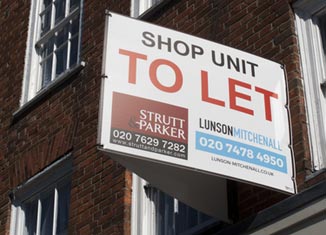
Weak house prices and poor demand have forced many homeowners to scrap plans to sell up, according to the Royal Institute of Chartered Surveyors’ (RICS) quarterly Lettings Survey, and become landlords instead.
The survey revealed that new instructions to let grew at its fastest pace in the survey’s history in July 2008. Its data showed +43% more chartered surveyors reported a rise than a fall in landlord instructions versus just +30% in the previous quarter, while +37% more saw a rise than a fall in tenant lettings, up from +30% in Q1 2008.
Meanwhile, many would-be buyers are now choosing to rent as they struggle to get enough cash together to satisfy cautious mortgage lenders. Gross yields have also risen sharply as the number of rents grows and house prices keep falling.
“The lettings market is booming with many vendors opting to rent their property while sales in the housing market continue to dry up,” said James Scott-Lee, RICS spokesperson. “Many are willing to ‘hold’ and await the return of capital appreciation. Becoming a landlord is now an increasingly profitable option with rising rents and yields offering good returns.”
But he did warn that the rise in supply could have an impact on rental growth as tenants enjoy wider choice.
Chancellor’s stamp duty comment was made ‘off-the-cuff’
Members were recently asked a series of questions by the National Association of Estate Agents (NAEA) relating to the recent speculation that the Chancellor may grant a stamp duty holiday in autumn and the results clearly demonstrated agents’ strong feelings on how this situation has been handled and the impact this has had on the market to date.
Some 25% of agents claimed that a sale had fallen through as a direct result of the Chancellor’s comments on stamp duty whilst 92% of agents believe the Chancellor’s remarks have increased consumers concerns.
Peter Bolton King, chief executive of the NAEA, said: “Instead of the Government formulating a careful plan outlining their thoughts clearly and concisely with a clear time frame in mind, this comment was simply made off-the-cuff. This is not particularly helpful in the current climate. It seems that there had been little regard to how this speculative comment might impact on what is already a delicate market. These figures clearly show the effect that this ‘loose’ statement has had on consumers and the property market as a whole, none of which are encouraging.”
Rents begin to dip in London thanks to widening choice of property
Rents in London have begun to dip, as the supply of rental property on the market overtakes demand as a vast number of sellers decide to let their property, reports Cluttons.
Cluttons’ South Kensington office reported that over the last month, rents have fallen by up to -5% in South Kensington, Chelsea and Knightsbridge, where the supply of property has doubled since the same time last year.
Tenants have become more demanding as the market swings in their favour and landlords are now less likely to receive the uplift in rents at renewal that they might previously have achieved. Cluttons believes they should consider making improvements to their property or offering added extras such as cleaners or gardeners to make their property more appealing.
Amelia Greene, partner for lettings at Cluttons’ South Kensington office, said: “The struggling sales market has fuelled a mini boom in lettings, but we are now starting to see rents dip across the board, as the number of new tenants coming to the market levels off.
“To prosper in the current conditions, landlords must have realistic expectations regarding rental income and steer clear of void periods at all costs. A number of ‘accidental landlords’ who have come to the market reluctantly after failing to sell their property, are refusing to budge at all on the asking rent, instead settling for void periods which professional landlords know are seriously detrimental to yields.”
There is so much choice, that tenants are viewing vast numbers of properties before committing, meaning that the ratio of tenants converting from viewing to contract is currently very low.
Online retail sales thrash the high street
Online retail sales in Britain rose by +11.3% in July compared to June as wet weather boosted online clothing sales while electrical sales also soared, according to the IMRG Capgemini e-Retail Sales Index.
The index showed Britons spent over £4.8bn online in July, the equivalent of £79 for every person in the UK. The survey showed shoppers continued to shop online despite pressures on disposable income. The figures were in sharp contrast to recent data from the British Retail Consortium, which showed high street sales in July were down -0.9% on June.
Mike Petevinos, head of Consulting for Retail at Capgemini UK, said: “Gloomy market conditions have not dampened consumers’ appetite for shopping online. Online sales continue to show strong growth, particularly when compared to the tough trading conditions on the high street.”
Skandia believes buy-to-let investors want out of the property market
Private investors are looking to place cash elsewhere as property becomes a less attractive asset thanks to decreasing property prices, according to investment services group Skandia.
Skandia said that £120bn was now invested in buy-to-let mortgages in the UK, and that investors would be likely to sell up as they saw mortgage costs rising while house prices and rental returns are stagnant or falling.
Buy-to-let investors could withdraw £18bn from the residential market as they find better places for their cash, according to the group. Buy-to-let purchases, which now account for 10% of all mortgages, compared with just 1% a decade ago, have been vital in providing a market for many of the more speculative inner city developments over the past few years.
Nick Poyntz-Wright, chief executive of Skandia UK, said: “Private investors have accumulated significant amounts of equity in buy-to-let properties after a long period of strong growth in home and flat values. Higher mortgage rates and falling property prices will cause investors to reconsider their exposure to residential property and many will choose a more diversified approach.”
The firm did not offer a timescale for when the fall would happen by, or evidence to support their hypothesis that buy-to-let investment would fall to the average level for the past decade.
Euro-zone economies leading the UK towards recession
The latest data from Eurostat recorded that economic growth in the Euro-zone decreased by -0.2% during Q2 2008 compared to an increase of +0.7% in Q1. It has lead to fears that this could impact on the already struggling UK economy and draw the country into recession.
However, Eurostat found that the annual growth rate still remained positive although somewhat reduced at +1.5% compared to Q1’s figure of +2.1%.
Member state data was also provided by Eurostat. The UK economy continued to increase on a quarterly basis, albeit marginally at +0.2%. The Euro-zone’s largest economy, Germany, suffered one of the biggest contractions at -0.5% and other key members, France and Italy, both saw growth drop by -0.3%.
Analysts have raised concerns that as the UK’s trading partners in the Euro-zone head towards recession, the country’s exports could be the first to suffer.
Patrick Foley, chief economist for the Lloyds TSB Group, told PIN: “The contraction of the Euro-zone economy will undoubtedly impact on growth in the UK. Due to the current weakness of the sterling it will only be export trade which will keep the economy going. At the moment the Euro-zone accounts for 50% of the UK’s exports. In the absence of these exports I would see the country moving into recession.”
Foley warned that a 1% slowdown in UK exports would lead to -0.1% reduction in economic growth.
HBOS to close The Mortgage Business
HBOS has announced that it will be closing its mortgage intermediary arm, The Mortgage Business (TMB), on Friday 22 nd August as it attempts to ‘streamline’ its mortgage operations.
Of the five mortgage brands owned by HBOS, TMB specialised in self-build and buy-to-let mortgages. TMB business will now be transferred to its other intermediary service Birmingham Midshires. Existing customers with TMB will be unaffected.
HBOS recently suffered from both a -72% fall in profits and a decrease in its share of the mortgage market. The lender reported its share of the market for new mortgages fell by -15% in H1 2008 and now stands at just +9%.
Andy Pratt, chief operating officer for Alexander Hall, told PIN: “HBOS is streamlining its business in an attempt to manage down its running costs. It has anticipated that the market will remain in a similar condition for the next 12 months. It appears unlikely that we will see HBOS reducing its products, instead by consolidating its business I would expect the lender to attempt to regain some of its market share. The Royal Bank of Scotland (RBS) is the other bank which operates a large multi-brand strategy with four separate mortgage businesses and it is possible that we could see it take the same action.”
Oversupply of rental properties leads to falling rents in Kensington and Chelsea
According to research by Marsh and Parsons Estate Agents, central London has an oversupply of rented properties as the number of available homes to let in Kensington and Chelsea were found to be at an ‘unprecedented’ level and as competition has increased rent prices have fallen.
The estate agent reported that landlords found it difficult to fill their properties, especially in in these areas. It recorded an annual increase of over +70% in the number of properties to lease on its books, from 360 in August 2007 to 618 in August 2008.
Increased competition has also raised the standards that tenants expect from rental properties. In 2007 a tenant would view 4-5 properties before making a decision and in 2008 the number of viewings has increased to 12. Due to the high level of competition landlords have lowered their rents in an attempt to avoid costly void periods. In August 2007 the average rent was £525 per week compared to £450 in 2008, a fall of -14%.
Emilie Dawes, area director for Marsh and Parsons, told PIN: “I would expect the volume of properties available to remain high over the coming months as would-be vendors continue to struggle to achieve the price they want on the sales side, and this is a trend we expect to be repeated throughout London. However, we do usually see a sharp seasonal increase in the number of prospective tenants in September, therefore we may well see the oversupply of property in this sector of the market decrease, which should mean that prices remain stable or possibly even strengthen.”
Ten tips for rising debt
The Council of Mortgage Lenders (CML), Citizens Advice and Shelter have joined together and offered advice to borrowers who are struggling with rising levels of debt.
The credit crunch has meant that there are fewer mortgages available and for those that are available the cost has risen and lending criteria has tightened. The CML estimated that 1.4m borrowers will be coming to the end of their fixed-rate mortgage deals in 2008 and they face moving to higher variable-rates if they are unable to remortgage elsewhere. This coupled with the dramatic increase in the cost of living over the last year means debt has become a major concern for some households.
The CML, Citizens Advice and Shelter have released ten tips for those facing difficulties; talk to your lender, as the earlier you get advice the better; talk to an independent debt advisors; plan for the end of a fixed-rate mortgage; take positive action, as ignoring debts will only make them worse; prioritise debts; do not miss payments, pay what is affordable each month; do not ignore letters or phone calls; if facing court proceedings, do not panic and do attend the hearings; do not abandon your property and finally, to consider ‘mortgage rescue’ offers carefully, as they can offer very little security for the future.
David Harker, chief executive for Citizens Advice, told PIN: “Anyone who is falling behind with payments should speak to their lender straight away. Lenders should negotiate with borrowers, but if you are having problems, make sure you seek free, confidential, independent advice without delay.”
Flagship for Edinburgh’s BioQuarter receives planning permission
The University of Edinburgh has recently been granted planning permission by the City of Edinburgh Council for the Scottish Centre for Regenerative Medicine (SCRM) which is set to become the flagship development of the city’s BioQuarter.
The SCRM will be situated adjacent to Edinburgh Royal Infirmary and on completion the three-storey centre will cover 96,875 sq ft and become the first part of Edinburgh’s 100-acre BioQuarter. It is planned that the SCRM will be operational in three years time.
Scottish Enterprise believes that the BioQuarter will establish Edinburgh as one of the top ten centres for biomedical commercialisation in the world. When completed the entire site is hoped to provide 500,000 sq ft of research space and 900,000 sq ft of accommodation for commercial research-based companies. It is expected to create 6,500 new jobs and to generate an extra £350m for the Scottish economy. It will also house the largest population of stem-cell researchers in the country.
Stephen Gallagher, senior director for business infrastructure at Scottish Enterprise, told PIN: “The latest announcement is an important step forward in the ongoing development of Edinburgh’s BioQuarter. This groundbreaking venture will capitalise on the unique combination of researchers, clinicians, patients and businesses and will lead to greater collaborative working and more commercialisation of Scotland’s world class Life Sciences research.”
Mortgage News
In PIN’s latest weekly mortgage recap, Tim Warburton reports…
Coventry Building Society has launched new discounted variable and fixed-rate buy-to-let products. A three-year discounted variable-rate has an initial interest rate of 6.39%, and a £1,999 arrangement fee. A two-year fixed-rate is available with rates of 6.59% or 6.89% for a fee of £1,999 or £999 respectively. All deals have a 65% maximum loan-to-value (LTV) as well as free valuations. Remortgage customers will benefit from either free legal fees or a £200 rebate. These products are also available through Coventry Building Society’s intermediary arm, Godiva Mortgages.
Bristol and West Mortgages has launched two buy-to-let ‘Summer Specials’ deals. A three-year tracker has an initial rate of 6.25%, a 75% LTV and a fee calculated at 1.5% of the advance and a two-year fixed-rate set at 6.85%, with a 75% LTV and a £1,499 fee. Both products come with free valuations. Remortgage customers will not pay legal fees.
Both The Mortgage Works (TMW) and Scarborough Building Society (SBS) have launched new buy-to-let deals and they have also cut rates. TMW has launched a number of new deals including a two-year tracker with an initial rate of 4.99%, a 60% LTV and a fee calculated at 3.75% of the advance. It has also cut the rates on a number of its products by up to -0.5%. SBS has launched a three-year fixed-rate set at 6.79% and has cut the rate on its three-year tracker by -0.3%, it now has an initial rate of 6.74%. Both deals require a 65% LTV and a fee calculated at 2.5% of the advance plus £195.
Halifax has launched new residential deals and also cut its rates by up to -0.45%. A new two-year fixed-rate is set at 5.84%, with a 75% LTV and a £999 fee. A three-year fixed-rate has been cut from 6.49% to 6.04%, with a 75% LTV and a £499 fee.
In addition, Money Partners has cut the rates on its entire two and three-year fixed-rate buy-to-let range by -0.35% and -0.3% respectively.
Colin Gay, managing director of Strategic Innovative Finance, told PIN: “The last month has seen products become more competitive and there are good deals available. People should be more positive about the market although I think that the reporting in the media has not been accurate and has damaged the sector. Conditions are not anywhere near as bad as they have been, especially when compared to the early 90s when interest rates reached 15%. Things are getting better and moving forward.”