Interest rate rises may well be over following the latest report from the Office of National Statistics (ONS).
Inflation stood at just 1.9% in July, according to ONS, which is down from 2.4% in June and below the Bank of England’s 2% target for the first time since March 2006. The revelation has led many analysts to reassess their position with regards to the potential for future increases in the base rate, which currently stands at 5.75%
Ian Kernohan, Royal London Asset Management economist, said: “Having surprised on the upside last month, there was a much bigger downside surprise for inflation this month. The announcement must have put some question marks over a move to 6% interest rates.”
A slowdown in the commercial market
According to the Investment Property Databank (IPD), average total returns (rent plus capital growth) were 0.2% in July which is the lowest monthly return from the sector for 12 years.
Prices in retail and industrial property fell in July by 0.6% and 0.3% respectively. Only the office market is bucking the trend with an increase of 0.3%. Although these falls were small, over the last five years prices rose consistently every month to record levels.
The data, based on 4,300 properties worth £58.5bn, confirms the view that investors will not pay such high prices for commercial property.
ARLA urges caution
The Association of Residential Letting Agents (ARLA) is urging buy-to-let investors to exercise caution when investing in new property for rental purposes, in order to avoid financial difficulty in the long run.
ARLA stresses that investors should do the necessary research before committing to a property, despite reports highlighting increased rental incomes that may suggest that the investment is fairly straightforward. Investors are advised to research local markets and find out about demand trends in specific, local areas. In this way, maximum returns can be aimed for and potentially costly mistakes avoided.
Malcolm Harrison, ARLA spokesperson, said: “You’ve got to be careful when you make any investment. You’ve got to check what the local market is all about and what they want.”
Figures from the Council of Mortgage Lenders show that the UK’s buy-to-let market remains buoyant into 2007, reflected by an increase in buy-to-let mortgage uptake.
Property prices in Scotland are dropping
According to the Lloyds TSB’s Scottish House Price Monitor, in the three months to July 2007, property prices in Glasgow and Edinburgh dropped by 1.2% and 1.4% respectively, compared with the previous quarter.
There was a 10% fall in prices in South East Scotland (excluding Edinburgh) and a 2.5% drop in the South West (excluding Glasgow). The slowdown is being blamed on interest rate rises and increases in the cost of borrowing.
However, some parts of the country continue to show strong growth. Dundee had a strong quarter with a 9.2% rise and the cost of properties in the North of Scotland also increased (13.1%) as did those in Edinburgh (2.8%) and in the Central/Fife/Perth/Tayside region (10.1%).
£100m regeneration project in Ilford
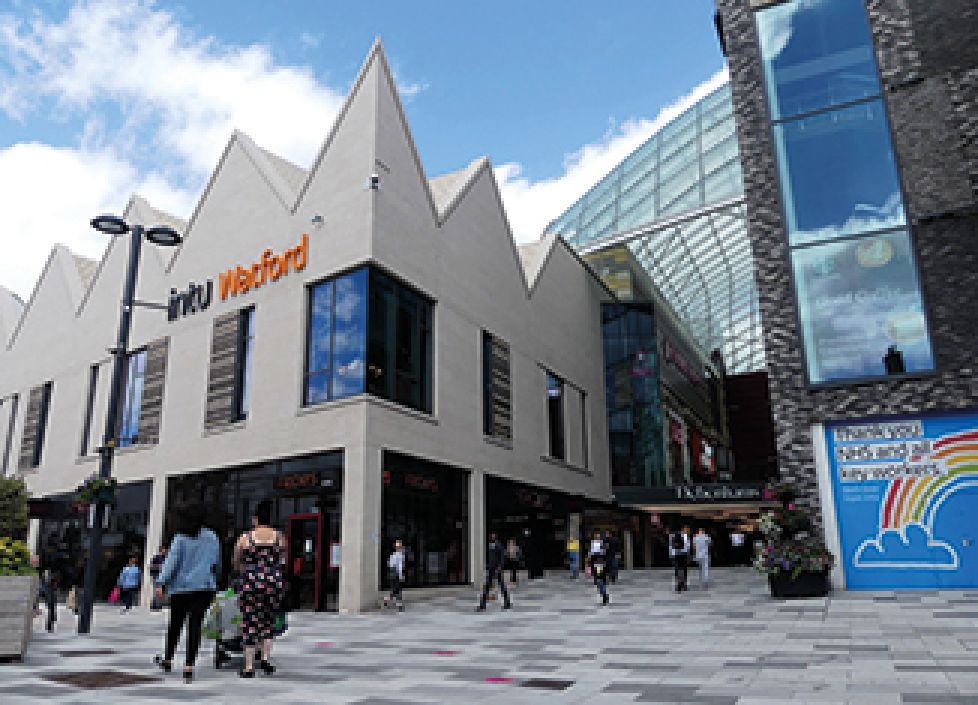
London Borough of Redbridge has selected Bellway Homes as the development partner to bring forward a flagship scheme as part of the regeneration of Ilford town centre, known as Unity Square.
The £100m mixed-use project, known as Unity Square, will include retail and leisure facilities and will create over 500 new homes. An integral part of the project will be the replacement of Ilford’s Kenneth More Theatre which will be replaced by a 300-seat theatre integrated with the concert hall in the Grade II listed town hall. The project will be completed in 2012.
Vicky Trietline, partner at Drivers Jonas, said: “This is an exciting joint venture that will add considerable value to the wider community of Ilford and Redbridge. The provision of modern theatre facilities in the town centre and the additional retail and leisure space will boost Ilford’s competitiveness in the region. The high-quality residential housing scheme of both private and shared ownership units will further contribute to the regeneration of Ilford’s Metropolitan Town Centre.”
Deals worth £2.5bn collapse as credit crisis forces retreat from property
Another two property deals worth £600m have fallen through, bringing the tally of aborted UK commercial transactions over the past week to more than £2.5bn as the credit crisis takes its toll on the market for offices, shops and industrial warehousing.
HBOS has withdrawn an indicative offer made last month for Erinaceous, which gave the quoted property services group a market value of £320m, according to a report by The Times newspaper, adding that, including debt, the company could have been worth £470m.
In a separate move, the owners of The Mailbox and the adjoining Cube scheme in Birmingham have taken the properties off the market. They were put on sale at up to £330m in April, but buyer demand has evaporated over the past few weeks because of higher borrowing costs.
The collapse of these two deals are accompanied by HBOS’s decision to shelve an offer of over £1bn for property developer Quintain, and the owners of the Pallestra building on the South Bank in London deciding to withdraw the £210m property from the sales market, with the owners blaming ‘softer markets’.
Stock market falls could lead to another surge in buy-to-let
THE housing sector should stand firm despite the recent stock market turbulence, analysts said yesterday. Economists said the recent volatility was unlikely to affect residential property prices, as the UK economy still remained strong and unemployment was low.
But the crisis in the US sub-prime mortgage market is likely to have an impact on mortgage rates in this country, although contrary to popular opinion, it could lead to lower rates rather than higher ones.
Martin Ellis, Halifax chief economist, said, “I don’t think the stock market falls will have much of an impact on the housing market. The economic fundamentals are still very strong, the economy is doing well and unemployment is still very low.
If you look back to the stock market crash of 1987, the housing market remained strong and continued to be so into 1988.”
He added that following the stock market fall in 2001, people were reluctant to invest in shares, with many instead turning to buy-to-let. He said if this happened again it may even give the market a boost.
Andy Wiggans, mortgage director at Bradford & Bingley, agreed adding: “What is going on at the moment is a fairly short-term issue. It would need to be a much longer-term mood to have an affect on the housing market as a whole.”
He said individual lenders, particularly those reliant on wholesale funding, would have to change their rates, but overall there was unlikely to be a big impact on the property market.
Swap rates, which are what mortgage lenders base their fixed rate deals on, are linked to gilt yields, so these have also fallen since the FTSE crash, dropping by around 0.25% in the past couple of weeks. As a result, some lenders have already re-priced their two-year fixed rate deals, with these falling by between 0.1% and 0.15%, and more lenders are likely to reduce their short-term fixed rate deals going forward.
Property in central London ‘disappearing’ says Knight Frank
In the latest Knight Frank Prime Central London Index (July 2007), the company has attributed the ‘disappearance’ of property as an important factor in continued price rises. Residential property prices in prime central London increased by 3.9% in July the highest monthly rate of growth since the start of the firm’s index in 1976. The annualised rate at 36.4% in the 12 months to July is also the highest annual rate since mid 1979.
Liam Bailey, head of residential research, says: “We have seen a phenomenal market in central London in recent years - led by a strong City economy, very healthy bonus rounds and growing employment and population levels in London. But this is only one half of the story - the demand side.
“On the supply side we have seen the strong demand requirements met by very constrained property availability - stock levels in Q2 2007 were 11% below the same period in 2006 and 23% below the same period in 2005. Add into the mix rising domestic wealth and rising foreign wealth coming into the country we can see why prices have risen strongly.
“But let’s look under the surface and try to understand why supply is so constrained. One of the most significant issues has been increased foreign ownership. Over 61% of all property sales over £4m in central London go to foreign buyers. However, unlike most domestic buyers, foreign buyers tend not to be releasing a property into the market when they purchase. They increasingly follow a different pattern (to UK buyers) by buying and then holding properties for much longer periods of time - therefore we see properties ‘disappear’ from the market.
“The traditional pattern of ownership was much closer to the following scenario: the foreign buyer would arrive in the UK to take up a work contract and purchase for occupation for the period of their employment. Following the termination of their contact they would move back to the US or Europe etc. Now the pattern has changed with the foreign buyer much more likely to hold onto their property for a longer period as an investment even following their return to their home country.
“For example, in 2004 an average foreign landlord letting a property after first having occupied it would only hold it for an average of 9 months before sale. In 2007 the figure was 20 months ... and rising.”
Fall in asking prices for London homes
Asking prices for properties in London have fallen for the first time in a year, according to property website Rightmove. The report could signal that affordability pressures across the country are about to ease.
Rightmove said that London asking prices, which had risen by around 2% per month for the past year, fell by 0.1% in the past month. The data suggested that sellers are adopting more realistic pricing expectations as purchasers struggle to cope with the impact of five rises in interest rates over the past year and mounting global economic uncertainty.
Across England and Wales, prices were up by a modest 0.6% in August, compared with 0.3% in July. That took the annual rate up to 12.8% from 10.3% last month. Despite the rise, Rightmove said that the trend was consistent with house prices increasing more in line with wage inflation for the foreseeable future.
Miles Shipside, commercial director of Rightmove, said that the weaker figures for London were an early indicator of the market’s direction. “This fall is the first we have seen for some time and is an early warning signal that even the buoyant London economy is susceptible to market forces. The capital and international status of London means that prices are likely to be more resilient in the longer term, unless the current turmoil in the financial market undermines employment and wealth creation.”
Figures from Nationwide last month suggested that the UK market is finally slowing down, after a “mini-boom” which lasted a year and a half and which saw the revival of double-digit property inflation.
If the weakness reported by Rightmove spreads nationwide, it would lower pressure on the Bank of England to move swiftly with another interest-rate rise. The Bank had suggested in this month’s Inflation Report that a sixth rise might be needed to stem inflationary pressures, but expectations of an imminent move have dropped after soft inflation numbers and amid chaos in the financial markets.
BL chief warns of price falls and delays for office developments
British Land, the FTSE 100 property developer, has warned of price falls in Britain’s £700bn commercial property market and expects several rival office schemes planned for the City to be delayed or scrapped.
Delivering a robust set of figures for British Land’s own £16bn property portfolio, Stephen Hester, chief executive, said “a realignment in retail (property) is going on”, and warned of price falls that are bound to occur in the office sector.
Mr Hester added: “Certainly there will be realignment in offices. I am not saying when. But it is the reason we have been the biggest seller of office space. Some offices are overvalued and in some cases people have on spectacles that are too rosy.”
Even so, British Land is pressing ahead with the construction of the Leadenhall Building. The group has yet to find a tenant for the 225m skyscraper that has been dubbed ‘the cheese-grater’. It will cost £286m but will not be ready until 2011.