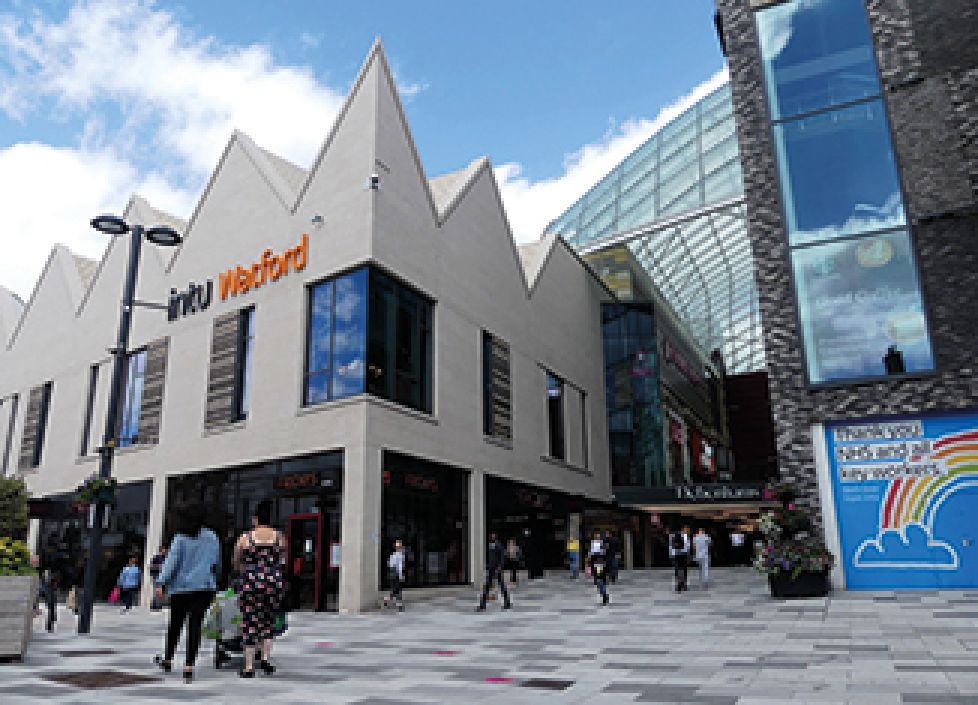
One of the largest commercial deals in Dusseldorf this year to date
Network communication company, Nokia Siemens Networks, has signed a deal with the €800m Valad German Aktiv fund, managed by the Valad Property Group, in one of the biggest commercial deals this year to date.
The company will move into a business park close to Dusseldorf Airport to take 17,000sqm of office, high-tech and warehouse space on a 5-year lease paying €2.5m per annum. This deal closely follows Valad’s lease contract with luxury car maker Daimler AG which is for over 27,600sqm of space, combining office, storage and production use until 2023.
Klaus Kortebein, CEO of Valad Germany, said: “We have been established in Germany since 1999 and have local experts in four Valad offices around the country which continues to be a buoyant occupier market. We are delighted to have signed leases with global names such as Nokia, Siemens and Daimler, which takes the total space leased by Valad in Germany to over 70,000sqm in the last four weeks alone.”
Both properties sit within the Valad German Aktiv fund, which focuses on acquiring higher yielding mixed commercial properties with good rental prospects and upside opportunities through intensive asset management. The fund was launched towards the end of last year and now comprises a portfolio valued at approximately €800m.
Credit Suisse acquires office building for €24.5m
Credit Suisse Asset Management Immobilien Kapitalanlagegesellschaft has acquired an 11,600sqm office building in Austria for €24.5m. The seller was San Diego-based Westcore Properties, which opened a European office in the Swiss city of Lausanne last year.
The six-storey, class-A building is located in the Wienerburg submarket of Vienna and was acquired by Westcore as part of a three-building portfolio from electronics firm Philips for $108m in February 2007. Marc Brutten, Westcore chairman, said the disposal was the culmination of a process to add value to the asset. He said: “Our team improved the physical plant and exterior while renegotiating the major leases to new 10-year terms, creating significant value.”
Westcore Properties owns and manages its property assets in Europe through Westcore Sarl, which is responsible for operations throughout Europe. Westcore Sarl has acquired some 160,000sqm of industrial and office buildings in Switzerland and Austria in the last 15 months.
In May 2008, Westcore Properties expanded and diversified its European operations with the opening of Airport Development Partners SA, an affiliate focused on the acquisition, operation and development of regional airports in Europe. Airport-related projects are currently being pursued in Switzerland, Austria and Poland.
Office take-up in Brussels increases by 6.4%
According to Savills’ research, take-up in the Brussels office market has increased by 6.4% compared to the H1 average of the last five years, surpassing initial expectations and reaching 285,000sqm which represented a 2% increase on the same period in 2007.
John Defauw, director and co-head of Savills’ Brussels office, said: “Office demand remains robust in Brussels and we have seen some very strong letting transactions take place by both public and corporate tenants. In particular, the corporate sector has accounted for 78% of lettings demand.”
In addition, there were 14 reported transactions above 5,000sqm compared to only 11 during H1 2007 and eight during the H1 average of the last five years.
With regard to prime rents, the report showed that this average figure remains unchanged at €295sqm although rents increased by 2.5% in the key sub-markets such as The Midi District and the Louise District as rents now stand respectively at €200sqm and €210sqm.
In terms of the investment market, the report stated that levels in Belgium reached €1.41bn during H1 of 2008, which is down 46% compared to the same period in 2007.
In Brussels, investment reached €1.054bn, down 23% compared to the same period in 2007.
Increased construction costs means less profit for Bulgarian construction companies
Yavlena, a Bulgarian real estate property company, claims that the increased cost of construction materials and the standstill in property prices will push down profit margins of the Bulgarian construction companies by 6-8% in 2008.
Currently the profit margin per build is 30-35%, which is considerably higher than a typical margin of 10-20% for mature markets, according to Yavlena.
Yavlena has also forecasted zero growth for the price of land plots zoned for residential construction in the bigger cities, citing oversupply. A notable development on the residential segment is the momentum of the secondary market fuelled by non-resident home owners looking to get out of the market, according to Strahil Ivanov, manager of Yavlena.
Rents in Czech Republic set to decrease
The average advertised rents in a number of regional capitals in the Czech Republic are stable or slightly decreasing, according to the Regional Development Ministry.
According to the ministry, agencies have reported the largest rent decrease in Plzeň and Pardubice for flats with more than 60sqm of floor space. While a year ago landlords asked respectively for CZK155 and 150sqm, now the price is CZK15 lower in both cities. Rents in larger flats are also declining in Liberec and Brno although average market rents in Olomouc and inner Prague are the same as last year. Landlords in inner Prague (districts 1-7) set the highest rents in the whole country, with the average monthly price for flats over 60sqm currently at CZK230sqm.
In the very centre of the Capital, the most expensive flats are in Přížská, Mostecká, Na Příkopech, around the Old Town Square and in Malá Strana. For large, newly refurbished luxury flats, the monthly charge may go as high as CZK350sqm but even in these extreme cases the advertised rents remain flat right now.
The demand for smaller flats, with up to 60 sq m of floor space, is still very high in inner Prague, and the advertised rents are growing as a result. While last year 1sqm cost an average CZK255sqm per calendar month, now the price is CZK270pcm. Rents for smaller flats in Prague outskirts have also increased, from CZK215sqm last year to currently CZK225.
The ministry has reported that, among regional capitals, the rents for small flats have only decreased in Ústí nad Labem and have remained flat in Brno. Other cities have seen a moderate increase. One city completely defying the trend is České Budějovice, where the average monthly rent for larger flats has increased by CZK75 to CZK190sqm.
The ministry also expects market rents to drop further in many parts of the country. Hynek Jordán, spokesman for the ministry said: “After 2010, when rent control will be abolished, the currently unregulated rents will decrease as those flats that are so far rent-stabilised will enter the market.”
Construction permit for Ukranian mixed-use development
Ukranian real estate company XXI Century Investments has announced the receipt of a construction permit for its 88,400sqm mix-use project in the western Ukrainian city of Lviv.
The existing buildings on the land plot have just been destroyed and the foundation works have begun.
The project, scheduled to open in 2010, will include 28,000sqm of office space, a Kvadrat shopping centre with a commercial area of 27,901sqm and 15,400sqm of multi-level parking.
The Kvadrat shopping centre will be developed in the format of a hypermarket gallery and will include a food supermarket, a large gallery of shops and an entertainment centre for both children and adults. The shopping gallery will contain approximately 70 shops encompassing consumer goods, personal services, banks and a food court.
The company said it is in negotiations with prospective anchor tenants.
Worldwide News
Australians default on a record number of loans
According to Reserve Bank figures, home buyers and other borrowers in Australia defaulted on a record $3.5bn of loan payments in the March quarter, as higher interest rates pushed them over the brink.
Reserve Bank figures showed the ratio of bank assets that were impaired (borrowers falling behind on payments) shot up from 0.19% at the end of December to 0.31% at the end of March. It is the most dramatic surge in bad debts since these records began in 1994.
In addition, the banks’ standard mortgage rate rose from 8.05% at the end of July 2007 to 9.35% by March 2008. It has since risen to 9.6% - adding more than $100 a month to the cost of servicing a typical $250,000 mortgage.
Other Reserve Bank data showed high interest rates and petrol prices were causing Australians to become thriftier with credit cards, with balances per card growing at the slowest pace in 13 years. The average card balance stood at $3,115 in May, up $30 from April. But with the number of cards up 5% in the year to May, outstanding balances were 10% higher than a year earlier. The figures come amid anecdotal reports of home buyers avoiding default on mortgage payments by putting them on credit cards.
Also, housing groups have called for bigger incentives to investors to build affordable rental properties. The call comes as the Rudd Government works on a plan to give investors $8,000 a year for 10 years to build and rent new homes to low-income earners at 20% below market rates.
Bank of Mexico raises interest rate twice in a month
The Bank of Mexico has raised interest rates for the second time in less than a month to slow inflation which is at its highest level in nearly four years (5.26%).
The bank decided on Friday 14 th July to increase interest rates by a quarter point to 8%. It last raised interest rates on 20 th June to 7.75%.
The bank also said it was considering raising its inflation predictions for 2008 to about 3.5% from 3% because of rising fuel and food costs. Last year, inflation was at 3.76%.
You know it’s a downturn when you have to bribe the broker
As the office vacancy rate for metro Detroit in the US edges near 25%, landlords are looking for anything that will give them an edge when it comes to bringing brokers to tour buildings.
To entice brokers to bring tenants to tour office buildings in the area, some building owners are doling out gift certificates, free tanks of gas and iPods to these brokers. Larger gifts, such as vacations, go to brokers who sign deals. Landlords at one office complex will even offset the carbon footprint created on the trip to the property.
Owners say the giveaways and gimmicks might not guarantee a lease, but they do get the attention of busy brokers who get barraged with daily e-mails about all the buildings in town with vacant space.
According to John Strabel of First Industrial Realty Trust, the cost is justified as a marketing expense. Money from the marketing budget for the leasing of buildings has been spent on iPods given to brokers and even plasma TVs, rather than advertising, he said.
Commercial property prices in the US carry on descending
A slowing economy in the US takes it toll on commercial property prices as they fell by 3.5% in May, which is the biggest drop since at least December 2000, according to Moody’s/REAL Commercial Property Price Index.
The index showed that prices are down 5.7% from a year earlier and 8.8% from its peak in October 2007. May’s decline marked three straight months of negative returns for the index.
In addition, the average price of real estate transactions has also dropped, reflecting a shift to lower-priced sales and fewer high-end/trophy properties. In May, almost 75% of all transactions were on assets priced less than $7.5m, compared to 50% in May 2007.
Brazil needs aviation infrastructure
According to the Brazilian Association of General Aviation (BAGA), Brazil lacks the infrastructure needed to accommodate the influx of visitors expected during the 2014 World Cup.
In an interview with National Radio, Febeliano said Brazil will need to start upgrading its airports as soon as possible to be able to handle an influx of visitors six years from now. He said the most critical situation is in Sao Paulo, South America’s biggest city and a major hub for international flights. The nation’s capital of Brasilia also has deficiencies at its airports, while Rio de Janeiro, which could host the final, also has problems.
Adalberto Febeliano, executive vice-president of the BAGA, said: “Today, the airport system attends to four million passengers a month. With the World Cup, this number will double.”
Experts say the root of the aviation problem in Brazil is chronic under-investment in radar, runways and other infrastructure. Safety upgrades, backup systems and even training for air traffic controllers have been delayed for years despite exponential growth in flights serving South America’s robust economies. However, Brazil hosted the Pan American Games in Rio de Janeiro last year without any major glitches.
In addition to hosting the World Cup, Brazil is bidding for the 2016 Olympics, which would also take place in Rio.
World’s highest rating for environmental stability
Dockside Green Community in Canada has received the world’s highest rating for environmental sustainability for a new construction project through the Canada Green Building Council – a platinum certification in Leadership in Energy and Environmental Design (LEED).
Dockside Green in Victoria, British Columbia, is a mixed-use development whose first-phase which includes 95 homes, townhouses and commercial space received 63 points out of a possible 70.
Thomas Mueller, president and CEO of the Canada Green Building Council (CaGBC), said: “Dockside Green is one of the most innovative green community developments in North America and a model for community development to follow. It demonstrates what can be done with the financing tools and industry knowledge which is available today and there is no reason for other developers not to develop this way.”
The LEED Green Building Rating System is a voluntary, consensus-based certification programme for developing high-performance, sustainable buildings. The system rates projects based on a points system that was developed by the US Green Building Council and adapted for Canada by the Canada Green Building Council.