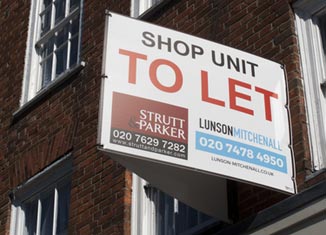
UBS, Switzerland’s largest bank, announced it will cut 5,500 jobs after reporting a net loss of $10.97bn for the first quarter of 2008. Most of the reduction in investment banking jobs is expected to occur in the United States and Britain. This may therefore lead to potential downturn for local property values.
The bank said the job losses, representing seven% of its staff, will be made by the middle of next year, through a combination of redeployment, redundancy or natural wastage.
The bank had warned investors last month to expect net losses of $11.42bn for the first three months of the year after writing off about $19bn on US-property and related credit positions in the period.
UBS, which has been hit hard by the recent subprime crisis in the United States, has been struggling to regain investor confidence since posting a series of heavy losses. The bank recently said that it has reduced its exposure to subprime-related assets by 60% since the third quarter of 2007.
UBS sent a letter to its Swiss customers, acknowledging their ‘concern and disappointment’ and reassuring them that ‘the bank remains strong’ thanks to its solid capital base.
Over-supply in Valencia region
Around 1m Spanish properties are in need of a buyer, according to CB Richard Ellis.
Around 50,000-100,000 of them are in the Valencia region, home to the Costa Blanca. It will take the market 2-3 years to absorb this overhang of properties.
Jose Louis Marin, head of the CB Richard Ellis office in Valencia, said: “After the boom, year’s supply and demand have to return to equilibrium.”
CB Richard Ellis also pointed out how professional standards slipped during the boom years of double-digit property price inflation, during which time “mistakes and inferior products went unnoticed”. Now that the boom is over, and supply is having to adjust to demand, only well located property with genuine appeal is selling. The consultants expect Spanish property prices to rise in line with inflation for the next few years.
Spanish falling land prices
The price of urban land in Spain fell by a national average of 2.7% to €277sqm in the last quarter of 2007 compared to the previous year, according to figures from the Spanish Ministry of Housing.
On a quarterly basis, land prices fell by 2.8%. Regional variations in falls were substantial, from as little as 1% in some provinces, to 41% in Leon, 33% in Alicante, 25% in Cordoba, 15% in Barcelona, and 13% in Malaga.
Spanish land prices are falling in response to the downturn in the property market. Prices are also being pushed down by the number of developers with liquidity problems who have to sell land to raise cash.
The cost of land represents, on average, 30% of the cost of a new property, though in some areas like Madrid it can be 50% or more. Falling land prices should enable developers to lower their prices, but this will take time to happen, if at all. Developers have an estimated stock of 500,000 unsold newly built properties to sell before the fall in land prices will flow through to property buyers.
Albania enters NATO
At April’s NATO meeting in Bucharest, NATO extended a full invitation to Albania and Croatia to join the fold.
This is a major step in Albania’s integration into Europe, and a pivotal point in its path to achieving full membership to the European Union. Though, much work is necessary on the part of Albania, the invitation proves that the steps already taken have been the right ones, and that the desire is there to do everything necessary to achieve full EU membership as soon as possible.
Due to its growth, potential and NATO and EU membership on the horizon, Albania, according to Liam Bailey, head of international research for David Stanley Redfern, could be a popular location for property investors.
He said: “In the last 2-3 years Albania has put political and ethnic tensions behind it and began to see some really solid economic growth, with around 8% GDP growth on average. Albania has been growing, but EU grants and loans to help prepare the country for full membership will only generate even greater growth.
“In that respect, the long road and work needed to gain EU entry is actually good for property investors, because property bought now at low prices, will continue to grow in value throughout the period when EU money is bolstering economic growth in the country.”
Worldwide News
“Malaysian residential market will plateau”
Although the Malaysian property sector was buoyant in 2007, prospects for real estate properties in 2008 will largely depend on the location and development profile of the area according to KFH Research.
It believes that the Malaysian residential property is expected to reach a plateau in 2008, underpinned by the aggressive launches of mid-to-high developments since 2006. On the demand side, take-up rates of new projects were not encouraging during the first nine months of 2007, with average sales performance of newly launched residential schemes at 44.3% compared to 40.6% in 2006.
KFH expect the take-up rates this year to be lukewarm, given the wait and see attitude adopted by potential buyers and investors. The low medium and medium-cost segments will see softening this year as disposable incomes are affected by the rising cost of living given escalating inflation.
KFH believes the high-end residential market is expected to witness a period of rationalisation and consolidation this year, and lose significant steam into 2009 on the back of increased supply, i.e. completion of new condominiums during the period.
Given the physical supply of high-end residentials coming onstream in 2008 and 2009, the growth in rentals and capital value is expected to ease by the end of this year. The rate of growth of occupancy levels and rentals will ultimately determine whether strong foreign interest will be sustained.
New Zealanders remain positive about residential property investments
An ANZ survey showed that property investors in New Zealand are becoming more circumspect, but they are continuing to expect strong returns from housing in the medium term.
The survey canvassed residential property investors across the country and found that one third of investors expect house prices to fall over the coming year, and another third expect house prices to stagnate over the next year.
Collectively, 70% of property investors expect house prices to decline or rise by less than 2.5%, up noticeably on last year’s total of 24%.
ANZ Chief Economist Cameron Bagrie said that this still looks optimistic considering the current interest rate environment, global conditions and the marked increase in real estate listings across the country. House sales figures for March were down 52% nationally and 56% in Auckland. Looking further ahead, over the next five years 69% of those surveyed expect price growth between 2.5% and 10%, broadly the same as last year.
Bagrie said: “The majority of investors expect weakness in the market to be a reasonably short-lived affair, which appears at odds with the historical pattern of house prices remaining flat for four years following an upswing.”
President of the New Zealand Property Investor’s Federation, Martin Evans, said that the survey showed that property investors are realistic about the current property market conditions and do not expect yields to change much in the foreseeable future.
Asia’s banks suffer in the global credit crunch
Two of Southeast Asia’s biggest banks, DBS Group and OCBC, recently posted lower quarterly earnings as losses from global market turmoil outweighed double-digit loan growth.
Asia’s biggest banks have largely escaped the worst of the subprime-related losses that have hit global peers such as UBS, but earnings may suffer in the second half when a looming U.S. recession slows Asia’s robust economies.
DBS, Singapore’s top lender posted a smaller-than-expected 2% drop in quarterly profit, hurt by credit-related write-downs, while third-ranked Oversea-Chinese Banking Corp’s profit fell 4% as investment losses slashed contributions from its insurance arm.
The results came after United Overseas Bank Southeast Asia’s second-biggest bank by assets, posted a 2.1% rise in quarterly profit, but warned loan growth could slow this year.
Middle Eastern developer acquires $80m of property
Plus Properties, a developer in the Middle East, has acquired $80m of property in the emirate of Ajman.
The acquisition was by way of a recent deal with Al Zorah, an Ajman-based company jointly owned by the Government of Ajman and Solidere International.
According to the terms of the agreement, which was signed by Plus Properties and Solidere International, the acquired plots will be developed to host major real estate projects.
“Statistics recently released by the Ajman Chamber of Commerce and Industry have revealed that the emirate’s annual investment growth rate stands at an average of 6.7%. Ajman’s strategic location, its scenic beauty and easy availability of key raw materials have made it an ideal location for investment”, said Georges Chehwane, CEO of Plus Properties.
Set along 12 sq km on Ajman’s coastline, Al Zorah City will be an integrated project comprising residential buildings, office towers, chalets on the sea, hotels and tourist resorts. Chehwane also announced that the company will be embarking upon new projects in the UAE, details of which are to be unveiled at the Abu Dhabi Cityscape Exhibition beginning on 13 th May. The company will also be shortly announcing projects in Lebanon and Jordan.