Shopping centre in Bucharest has 120,000 visitors during first weekend
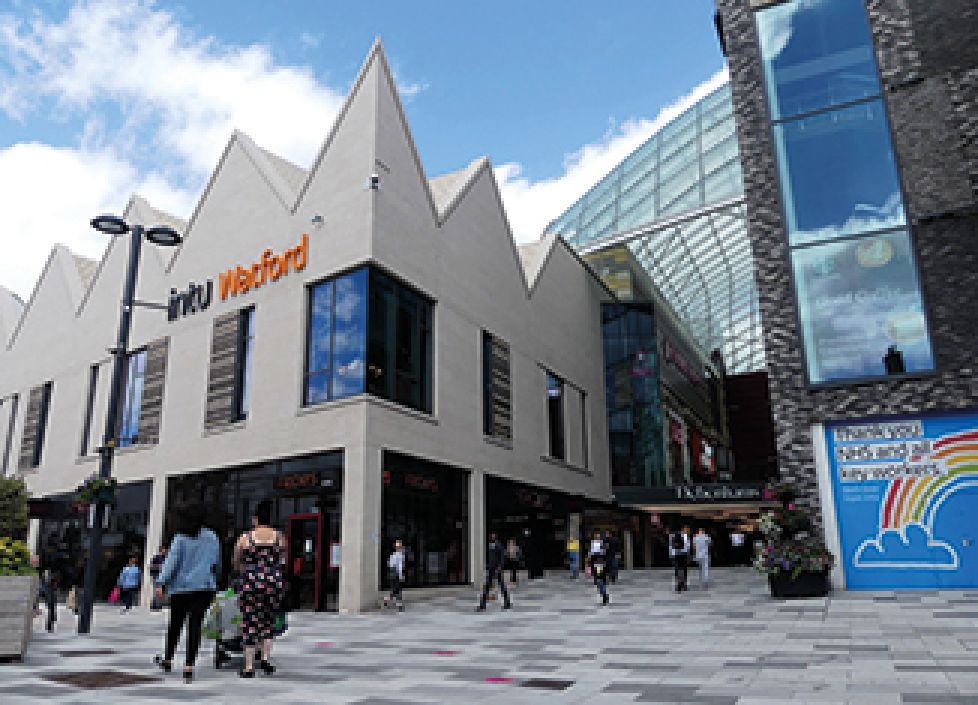
Baneasa Shopping City (BSC), the most eagerly awaited shopping centre in Bucharest, Romania opened its doors for the first time on the 18 th of April and attracted over 120,000 visitors during its first weekend of trading.
The mall is now host to a number of multinational fashion brands, many of which have never been sold in Romania before, as well as IKEA, Carrefour, a cash and carry store, a DIY store and ‘ Motor City’, which sells the most prestigious cars in the country.
Ali Ergun Ergen, retail development manager at Baneasa Developments, said: “Almost two years ago, on April 19th 2006, Baneasa Shopping City was launched. I promised then, that it will make it possible for consumers not to travel abroad for seasonal shopping. I am extremely proud that we could keep our promise!”
The model Eva Herzigova attended the opening ceremony and Baneasa also offers the first three-level food-court in the country. BSC will also have the largest entertainment centre in Romania, currently undergoing the second phase of construction.
The total investment in the project exceeds €1.8bn and will cover over 221 hectares of land. In addition to the 450,000sqm of retail space, the Baneasa Project will offer 4,500-5,000 new housing units at Baneasa Residential, plus a state-of-the-art business park incorporating 250,000sqm of class A and A+ office space in the Baneasa Business and Technology Park.
Prices in Baltics expected to keep falling
Baltic property prices are only at the beginning of a decline that might last for several years, according to Paul Oberschneider, the founder of estate agency Ober-Haus.
The decline will also affect commercial property, such as retail and industrial real estate, Oberschneider, who founded Ober-Haus in 1994 and last year sold it to Finland’s Realia Group Oy, told the Baltic Business News this week.
“We are perhaps at the beginning of a long, protracted decline rather than in a knee-jerk correction”, Oberschneider wrote. “For a correction to fully occur, it may take several years, as prices come back to a normal equilibrium point.”
Mortgage lending and property investment that in the past three years boosted economic growth in the Baltic countries of Estonia, Latvia and Lithuania, have slowed as a result of rising inflation and banks setting stricter terms for borrowers.
House prices in Tallinn in Q4 2007 were 14.5% lower than in Q4 2006, representing the weakest capital city property market in the world, according to the Global House Price index compiled by Knight Frank, with the Latvian and Lithuanian capitals also among the six biggest decliners.
Oberschneider’s development company, Haeuser-Oberschneider Real Estate, owns four retail centers in Tallinn, and said last year it was planning residential development in the Lithuanian capital Vilnius.
Ankara-Eskişehir high-speed rail link in Turkey near completion
With initial safety testing of the track all-but complete, the newly built Ankara-Eskişehir high-speed rail line in Turkey is now ready for test driving the trains, which will continue until the September/October.
According to information provided by Directorate General of the Turkish State Railways (TCDD) officials, a mobile ultrasonic testing unit was rented from Germany to detect cracks in the rails and determine the soundness of the rails’ welding and connections. The data from the ultrasonic unit was then sent to a lab in Germany for analysis.
Test drives on the new high-speed rail line began at the end of April and will continue for several months, officials said.
When the high-speed trains, which were specially produced in Spain, start running between Ankara and Eskişehir, the usual three-hour travel time between the two cities will decrease to just one hour and 10 minutes.
Twice as many Warsaw apartments for sale compared to last year
In Warsaw, Poland, there has been a two-fold increase in the number of residential apartments for sale, up from 6,300 in Q1 2007 to 13,500 in the first quarter of 2008, according to Reas Consulting. However, new supply is slowing down and around 3,500 new units were put on the market in the first three months of this year, a much lower figure than in Q4 2007.
Reas says that prices have stabilised in Warsaw at Zloty 9,000sqm (£2,035sqm), but from its figures it appears that prices have started to fall. The company says that prices rose by 5% between Q1 2007 and Q2 2008 but prices were 15% higher between Q1 2007 and Q1 2008, three months earlier.
The company reports that off-plan sales are still strong though and that at the end of Q1 2008, 87% of units planned for completion in the first half of 2008 were already sold, along with 70% of those planned for the second half. In the first quarter of 2008 a total of 3,500 units were sold, which was ‘slightly better than the fourth quarter 2007 and much better than the third quarter 2007’.
Reas expects the sales rate to increase towards the end of this year, with annual sales of 15-16,000 units. This compares to forecasted supply of 22-24,000 units this year. In the longer term, the company expects the number of completed but unsold units to reach 10-15% or 2-3,000 units by the end of the year and anticipates that this will increase further in 2009.
The report concludes: ‘The next 24 months may be rather difficult for Warsaw developers: supply will remain at an exceptionally high level, the interest rate is more likely to rise than to fall, prices will stabilize and profitability of the development activity will decrease.’
According to official statistics, the population of Warsaw is approximately 1.7m, yet Reas estimates that there are several hundred thousand more people more living within the city limits that are not officially registered. Compared to other European capitals, Warsaw is populated by the lowest percentage of the country’s population (below 5%), while for large and medium size countries the percentage usually falls between 8% and 12%.
It is therefore expected that the population of Warsaw will increase significantly over the next 10 years, eventually absorbing the current oversupply of property.
Worldwide News
The real reason property prices are rising in India
While most estate agents in India will be quick to tell you that a massive shortage of supply, compared to soaring demand, is the reason property prices have been rising rapidly, many of the steel producers are blaming the gap between demand and supply as the real reason for the rising prices.
There is currently no control over the prices of steel and many other raw materials in India, and prices for sand, cement and labour have also soared over the past few months.
The price of steel has already increased by over 35% this year, leading to construction delays for both commercial and residential property developments.
The construction industry consumes 33% of all the steel produced in India, and the net result has been that building costs have jumped around 30%, after calculating the price rises in cement and labour also.
The fact remains however, that property investors that buy off-plan in India are benefiting from a worldwide shortage of raw materials, which is pushing up the price of the property long before it is completed.
Melbourne property prices down nearly 10%
Melbourne house prices have recorded their biggest quarterly fall in value since 1993 as interest rate rises and fears of a slowing economy have subdued demand.
The median price for a detached home in Melbourne in Q1 2008 was A$432,500 (£205,375) a slide of 8.4% from Q4 2007.
The base rate in Australia is currently 7.25% and the National Australia Bank has just increased its variable mortgage interest rates by 0.1%, raising its standard variable home loan rate to 9.46%.
Real estate agents were expecting a cooler housing market this year after Melbourne’s median price surged 23.4% in 2007 to $A485,000.
The Australian Reserve Bank’s decision to lift official interest rates four times since August last year, combined with higher petrol and food prices, is reported to have capped consumer spending power.
However, Melbourne’s most popular suburbs, located in the inner-city, remained resilient despite the general price decline. Kensington’s median price rose 5.5%, Toorak rose 8.2%, Prahran gained 9.3% and Port Melbourne was up 10.7%. Brighton was the odd one out, with its median price falling 4%.
Data from the Real Estate Institute of Victoria has revealed that all the gains made by Melbourne property since mid-2007 were wiped out by March this year. It was the largest fall in a three-month period since the third quarter of 1993 when house prices slid 10.9%.
China still attracting the most FDI
Capital flows to emerging markets reached an all-time high last year, with much of the increase due to FDI, according to new research.
The Institute of International Finance found that FDI into emerging markets increased from $119bn in 2006 to an estimated $256bn last year, with a further increase to $286bn predicted for this year. The research said: “The strength of FDI comes despite an evident rise in global corporate caution in recent months.”
Overall capital flows into emerging markets reached an estimated $782.4bn in 2007, increasing from $568.2bn in 2006 and $521bn in 2005. The trend is set to continue, with strong FDI flows projected globally and China is expected to lead the way with $88bn while Latin America is likely to attract $55bn.
The findings are backed up by annual figures released by consulting group OCO Global, which found China to be retaining its 2006 ranking as the top global destination for multinational investment, attracting 1,171 projects.
Meanwhile, the Foreign Direct Investment Confidence Index, a regular survey of global executives conducted by management consulting firm AT Kearney, found that China and India are the two most appealing FDI destinations and that 15 of the most attractive 25 FDI destinations are developing markets.
Emerging markets have registered the strongest investor optimism, with India, China, Brazil, the United Arab Emirates and Vietnam experiencing the most positive change in investment outlook during the past year, according to executives.
“The world’s economic centre of power continues its perceptible shift from developed to developing markets”, commented Paul Laudicina, managing officer and chairman of AT Kearney.
Rents in Dubai finally stop rising
There were no significant changes in Dubai’s annual residential rents in the first quarter of 2008, compared with the last quarter of 2007, according to Asteco, the UAE’s largest real estate company.
Asteco’s quarterly residential report found that The Palm Jumeirah and Old Town Burj Dubai command the highest annual rents in the city, with studio and 1-bedroom annual rentals at AED 100,000 and AED 140,000 respectively (£13,700 and £19,200). The lowest rentals can be found at International City with studios ranging from AED 42,000 and 1-bedroom units available at around AED 58,000.
When comparing year-on-year rental changes in Dubai, the highest increases were reported at The Greens for studios where average annual rents increased by 31% from AED 65,000 to AED 85,000. However, 2-bedroom units at International City witnessed a 36% increase in rents from AED 70,000 to AED 95,000 when compared to the same period last year.
Other areas that saw year-on-year rental increases include the Old Town Burj Dubai real estate development that reported a 17% increase for 1-bedroom units and a 21% increase for its 2-bedroom apartments.
Rental rates for villas in Dubai that are determined based on location, size and condition saw Mirdiff commanding the lowest rates, while Jumeirah commands the highest rents due to its close proximity to the beach and Sheikh Zayed Road. Average annual rent for a 4-bedroom villa in Mirdiff is now AED175,000 while a similar property at Arabian Ranches or Jumeirah would rent at over AED 300,000.